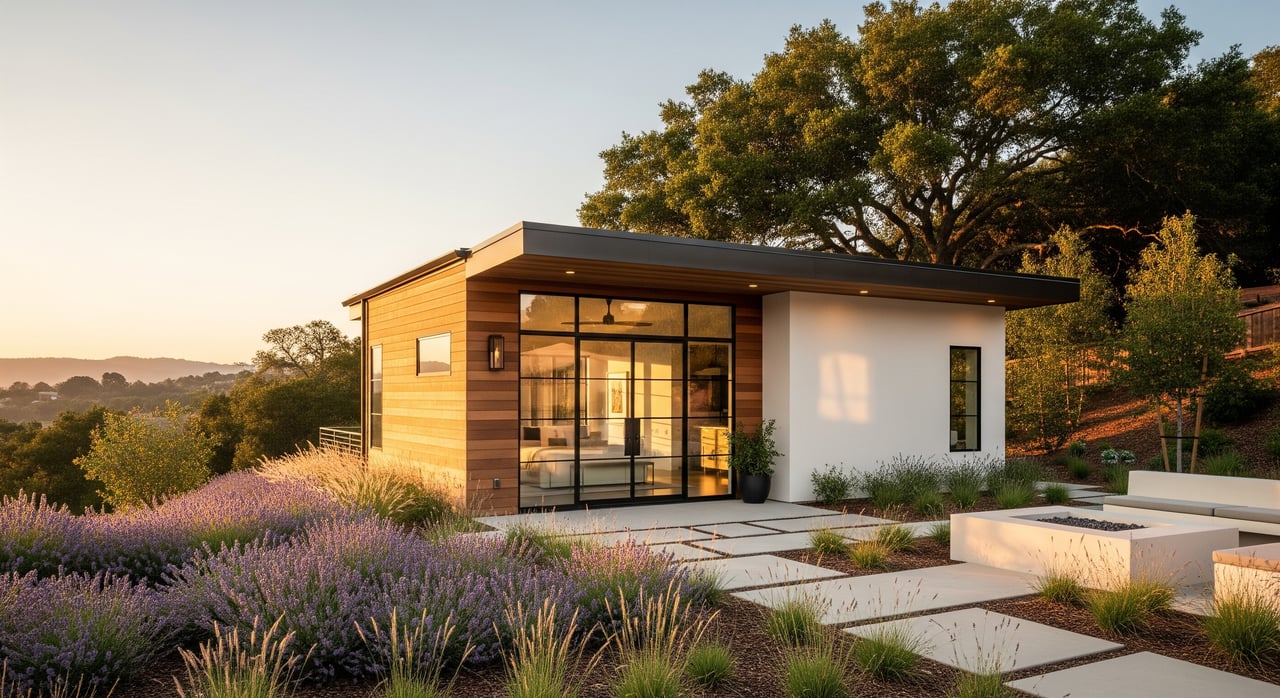
Thinking about adding an ADU to your Walnut Creek property but not sure where to start? You are not alone. Many East Bay homeowners want extra space for family or rental income, yet the rules, permits, and costs can feel overwhelming. In this guide, you will get a clear picture of how ADUs work in Walnut Creek, what to confirm with the city, realistic timelines and costs, and smart ways to finance the project. Let’s dive in.
What an ADU is in Walnut Creek
An accessory dwelling unit, or ADU, is a self-contained home on the same lot as your primary residence. California has streamlined ADU approvals to make them easier to build. Many ADU applications that meet objective standards are handled as ministerial permits instead of discretionary reviews. Walnut Creek implements these state rules through its zoning and building processes, so you will still need to follow local standards for size, placement, height, and design.
State law also recognizes junior ADUs, usually created within the existing home. The city applies objective standards and building codes, and your parcel’s zoning and any overlay districts will guide what is allowed. Always verify the latest rules with the City of Walnut Creek Planning Division and the municipal code for your address.
Rules to confirm for your address
Every lot is different. Start by confirming these items with Walnut Creek Planning.
Zoning eligibility
- Whether your zoning district allows an ADU and if any overlays apply, such as hillside, floodplain, or historic.
- If you can add an ADU with a new primary home on an infill lot, or only on lots with an existing home.
- Whether multifamily or duplex properties have different ADU allowances.
Setbacks and placement
- Detached ADUs often have reduced side and rear setbacks in many Bay Area cities, sometimes as little as 4 feet, when they meet objective standards.
- Attached ADUs typically follow the main home’s setbacks, but interior conversions can use the existing building envelope.
- Front yard setbacks are commonly enforced, so locating the ADU behind the primary home or over a garage is a frequent solution.
Size and unit types
- Junior ADU: typically up to 500 sq ft and within the existing home.
- Attached ADU: created by converting space or adding onto the home.
- Detached ADU: many local codes allow up to 1,200 sq ft, though actual limits vary.
- Combined limits: many cities allow one ADU plus one JADU per single-family lot. Confirm Walnut Creek’s exact caps for your zoning.
Height and design
- Detached ADUs often follow accessory structure height limits, which can be lower than the main home.
- Some design standards apply to ensure architectural compatibility, especially if visible from the street or in special districts.
Parking rules
- California reduced parking requirements for ADUs in many cases, including when near transit or when replacing existing on-site parking.
- Walnut Creek may still require a parking space in some situations. Ask Planning to confirm exemptions for your site.
Utilities and services
- Confirm whether separate utility meters are required and whether new water or sewer connections trigger capacity fees.
- Check electrical service needs with your provider if adding significant load for HVAC or all-electric designs.
- Ask about any public works requirements for driveways, curb cuts, or stormwater.
Permits, fees, and timeline
Getting permits is manageable when you plan ahead and submit complete documents. Expect ministerial processing if your project meets objective standards.
Step-by-step permit path
- Feasibility check with planning and building staff.
- Prepare site plan, floor plans, elevations, structural details, and a utility plan.
- Submit for ministerial ADU review and building plan check.
- City plan review, including building, public works, and any applicable resource checks.
- Permit issuance, inspections during construction, and final occupancy approval.
Typical timeline
- Pre-application conversation or meeting: days to a few weeks to schedule.
- Design and plan preparation: 2 to 8 weeks, depending on scope and your design team.
- Plan review to permit: commonly 1 to 3 months when plans are complete and standards are objective.
- Construction:
- Garage or interior conversion: about 4 to 12 weeks.
- Small detached ADU, 400 to 800 sq ft: about 3 to 6 months.
- Larger or complex detached ADU: about 6 to 12+ months.
- Overall, expect about 4 to 12 months from feasibility to move-in for straightforward projects.
Fees to budget
Fees vary by scope and valuation. Common items include:
- City plan check and building permit fees.
- Inspection fees.
- Utility connection or capacity fees for water or sewer.
- Public works fees for driveways or stormwater changes.
- School impact fees may apply based on state and local rules.
Many jurisdictions reduce or prorate fees for smaller ADUs under certain thresholds. Check Walnut Creek’s current fee schedule for your project type.
ADU costs in Walnut Creek
Bay Area construction costs are higher than national averages, and local labor and materials drive pricing. Site constraints, finish level, and utility upgrades also affect the total.
What drives cost
- Scope: garage conversion or interior JADU vs attached addition vs detached new build.
- Size and finishes: simple finishes cost less per square foot than high-end selections.
- Site complexity: hillside or tight access, new foundations, retaining walls, and long utility runs add cost.
- Electrical and mechanical choices: all-electric designs, heat pumps, and solar may shift upfront costs and operating savings.
Typical cost ranges
Use these planning-level ranges for the Bay Area market:
- Garage or interior conversion or JADU: roughly 50,000 to 150,000 dollars.
- Small detached ADU, 400 to 600 sq ft with basic to mid-range finishes: roughly 150,000 to 300,000 dollars.
- Mid-size detached ADU, 600 to 900 sq ft with mid-range finishes: roughly 250,000 to 450,000 dollars.
- Larger or higher-end detached ADU, 900 to 1,200+ sq ft: roughly 400,000 to 700,000+ dollars.
- Per-square-foot guidance: about 200 to 600+ dollars per sq ft depending on scope and finishes, with many Bay Area projects near the higher end.
These are estimates. Get site-specific bids from local contractors who regularly build ADUs in Walnut Creek.
Smart financing options
Several paths can help you fund an ADU while managing cash flow:
- Cash savings for smaller scopes or phased projects.
- Home equity line of credit for flexible draws during construction.
- Cash-out refinance to lock a long-term rate and fund a larger project.
- Construction or renovation loans that fund draws as you build.
- Energy-focused financing for qualifying efficiency upgrades.
- Grants or local incentives where available through regional programs.
A simple approach is to compare the monthly cost of funds to projected rent or savings from multigenerational living. Run a pro forma that includes loan payments, property tax changes, insurance, utilities, maintenance, and a vacancy reserve if you plan to rent the unit.
Value, rent, and taxes
ADUs can improve flexibility for your household and add potential income. Whether you plan to house family, downsize on-site, or rent long term, align your design with your use case to control costs and maximize value.
- Common uses: multigenerational living, long-term rental income, caregiver housing, or a studio that doubles as guest space.
- Rental approach: long-term rentals are commonly allowed, while short-term rentals may be restricted by local rules or HOAs. Confirm Walnut Creek’s current short-term rental policies before planning for vacation rentals.
- Property taxes: physical improvements generally increase assessed value. Check Contra Costa County Assessor guidance on how improvements are treated and plan for the incremental tax impact in your pro forma.
For valuation, ask an appraiser familiar with ADUs in Walnut Creek and compare expected rent to total project cost. The goal is a clear view of your payback timeline and long-term return.
Homeowner checklist
Use this simple step-by-step plan to stay on track.
Step 0 — Quick feasibility
- Confirm your zoning and any overlays for your address.
- Decide if your best path is a garage conversion, an interior JADU, an attached addition, or a detached unit.
Step 1 — City confirmation
- Call Walnut Creek Planning Division. Ask for the current ADU standards, fee schedule, and application checklist.
- If needed, schedule a pre-application meeting.
Step 2 — Site assessment and pricing
- Engage an architect or designer to draft a preliminary site plan and layout.
- Get two to three contractor estimates for the scope you want.
Step 3 — Utilities and permits
- Confirm water, sewer, and electrical requirements and any likely connection fees.
- Ask building staff about plan check timelines and any design or public works triggers.
Step 4 — Financing and valuation
- Compare HELOC, cash-out refinance, or construction loan options to your budget.
- Build a pro forma with rent or savings, plus taxes, insurance, and maintenance.
- Consult the county assessor’s guidelines for improvement assessments.
Step 5 — Build and monitor
- Submit complete plans for ministerial review.
- Track inspections and coordinate utility work during construction.
- Keep contingency funds for change orders or unforeseen site issues.
Common pitfalls and pro tips
- Do not skip a feasibility check. Zoning, setbacks, utilities, and overlays are the true gatekeepers.
- Design to your goal. A simple, right-sized layout often delivers the best value, especially for rentals.
- Optimize utilities early. Knowing sewer and electrical plans avoids costly surprises after plan check.
- Get multiple bids. Scope clarity and comparable quotes protect your budget.
- Verify HOA and short-term rental rules. These can limit how you use the ADU.
- Plan for soft costs. Permits, design, engineering, and surveys add up. Budget them from day one.
Ready to plan your Walnut Creek ADU?
If you want a clear view of costs, timelines, and rental potential before you commit, you are in the right place. With a finance-first approach and local contractor connections, we can help you compare ADU paths, model funding options, and estimate rent or multigenerational savings with less guesswork. Reach out to schedule a quick planning conversation with Glen Dsouza.
FAQs
What are the basic ADU types in Walnut Creek?
- Junior ADUs within the existing home, attached ADUs created by conversion or addition, and detached ADUs as standalone structures. Confirm exact size caps with the city.
How long does ADU permitting usually take?
- For complete, objective applications, plan review to permit often takes 1 to 3 months, then construction ranges from about 1 to 12+ months depending on scope.
What does an ADU typically cost in the East Bay?
- Conversions often range from about 50,000 to 150,000 dollars, while detached units can range from about 150,000 to 700,000+ dollars based on size and finishes.
Do I need to provide parking for an ADU?
- State law reduces parking in many cases, such as near transit or when replacing on-site spaces. Walnut Creek may still require parking in some situations, so verify for your address.
Can I rent out my ADU in Walnut Creek?
- Long-term rentals are commonly allowed. Short-term rentals may face stricter local or HOA rules, so confirm current policies before planning on vacation rental income.
Will my property taxes go up after building an ADU?
- Improvements typically increase assessed value. Contact the Contra Costa County Assessor to understand how your ADU will be assessed and plan for the change.
What financing options work well for ADUs?
- Many owners use a HELOC, cash-out refinance, or a construction loan. Compare monthly costs to projected rent or household savings to choose the best fit.